For anyone who's drifted, who still loves their church, and who can't quite figure out why the door feels heavier than it used to
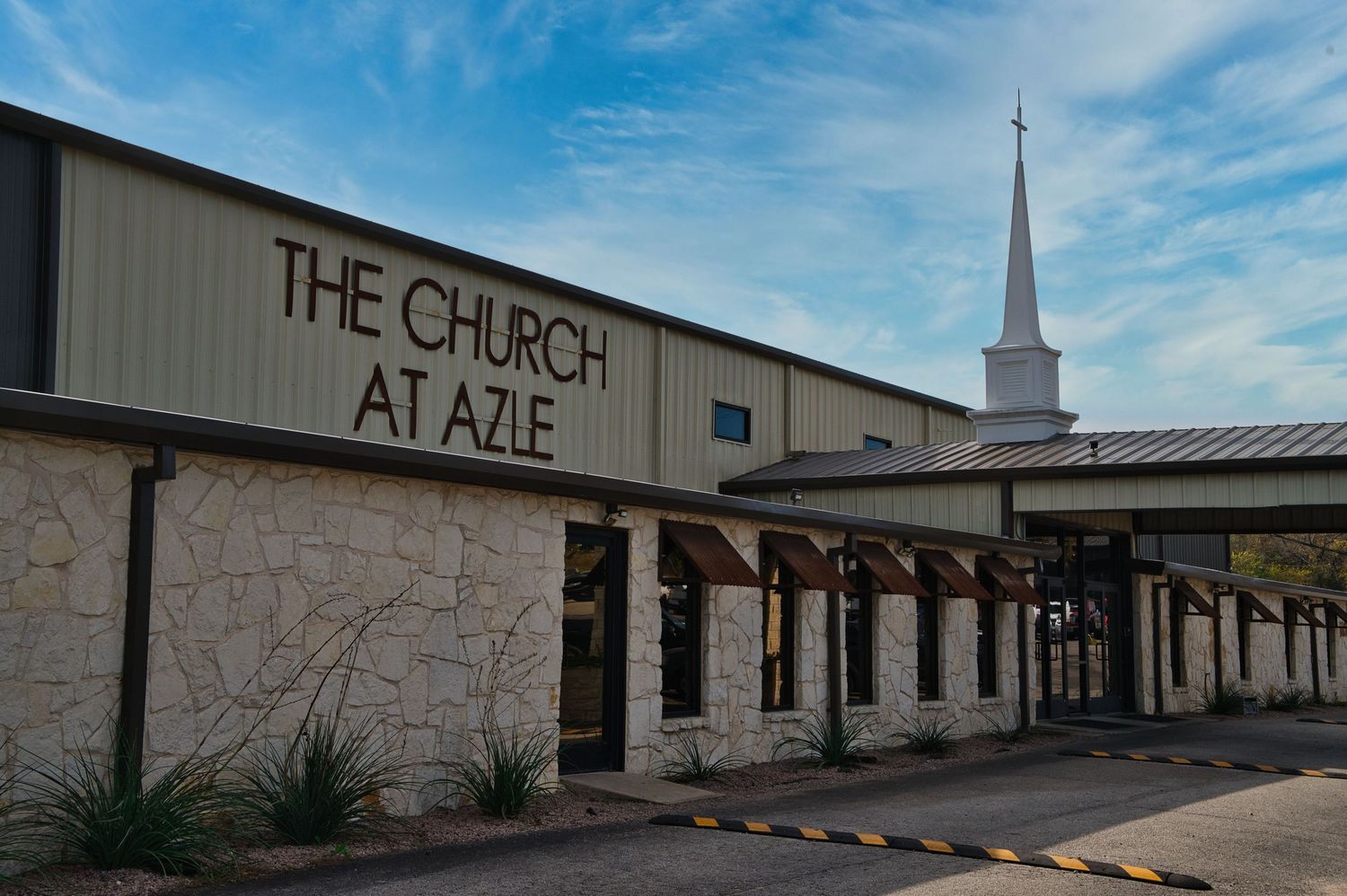
I woke up on a Saturday not long ago, did the normal Saturday things, and at some point in the afternoon it hit me. Tomorrow's Sunday. Which meant I had a decision to make. Go to church, or don't.
If you've never wrestled with this, that probably sounds like the easiest decision in the world. Go to church, knucklehead. And honestly, for most of my life, it was that simple. But for a few months, it hadn't been. And I want to be upfront about something before I go any further: this wasn't a crisis of faith. I wasn't mad at God. I didn't wake up one day and decide church wasn't for me. I love my church. I love the people there, the ones who show up for each other when life goes sideways, the kind of family you didn't know you needed until you needed them. None of that changed. I knew I needed to be there. I knew I needed my people. Knowing that and actually walking through the doors turned out to be two very different things.
What changed was me. Or more accurately, what changed was how much I had left in the tank.
The Slow Leak Nobody Warns You About
If you've ever drifted from church, somebody's probably asked you why, expecting a tidy answer. A falling out. A hurt feeling. A theological disagreement. Sometimes that's exactly what it is. But sometimes the answer is messier than that, and a lot less satisfying to explain at a potluck.
For me, it wasn't one thing. It was a pile of things, and they didn't even have the decency to arrive one at a time. It started with a death in the family, a relationship that had never been an easy one, handled out of obligation more than closeness, which is its own strange kind of grief. Nobody warns you that losing someone complicated can weigh just as much as losing someone you adored, just in a different, more tangled way. Not long after that, a home crisis displaced us for months. Then a family health scare meant driving hours away to make sure someone I loved was taken care of. We came back, only to get displaced a second time. Then we lost my own dad, and made the trip to be with family. We came home, and a natural disaster took out a good chunk of our property and totaled a vehicle in the same afternoon. Insurance calls. Contractor calls. More insurance calls, most of which my wife handled, not me. She's the organizer in our house, the one who can keep six moving pieces straight in her head while I'm still trying to locate piece number one. Watching her work the phones with insurance adjusters and contractors, calm and determined the whole time, made me realize something uncomfortable. I wasn't sure I had that kind of capability left in me right then. She just kept going, the way she always does, facing it all in a kind of faith that looks almost effortless from the outside, even though I know it isn't. A move into assisted living for someone we loved, the right call and still somehow another kind of loss, came next. Then a long-delayed memorial for that first death, the complicated one, finally held months after everyone had caught their breath enough to hold it.
And somewhere in the middle of all that, a milestone birthday was closing in. Sixty. It wasn't the day itself that hit me, actually. The realization started creeping up on me a couple months before my birthday even arrived, which tells you something about how much that number was already sitting in the back of my mind uninvited.
I remember telling Carrie flat out, I didn't want any kind of celebration. No party, no fuss, nothing. Just let me get on with my day like it's any other Thursday. In hindsight, that request says a lot more than I meant it to. I wasn't trying to be difficult. I think some part of me just didn't want to stand still long enough to actually feel the number land. A birthday makes you hold still for a second, and holding still was the last thing I wanted to do right then.
Somebody, and for the life of me I can't remember who now, heard me say that and pushed back a little. They said something like, maybe your birthday celebration isn't just for you. Don't take that away from the people who want to celebrate you. I've been chewing on that one ever since, and not entirely comfortably. Nothing like a little unexpected guilt trip to go along with your midlife reflection. But they had a point, and it's stuck with me longer than I expected it to.
Because underneath the resistance to a party was the real thing I was actually wrestling with. Somewhere in those two months of not wanting a celebration, my mind wandered back to my dad turning sixty. I remember it clearly, the way you remember your parents hitting ages that seemed impossibly far off when you were a kid. I remember thinking, at the time, that sixty sounded old. Not ancient, but solidly on the other side of some invisible line, a settled kind of age, the kind where a man's already mostly become whoever he's going to be. I filed it away the way you file away most things about your parents' lives when you're younger, as information about them, not as a preview of anything coming for you.
Except here I was. Sixty myself, or getting there fast. And it hit me somewhere in the middle of all that chaos, quiet and blunt: I'm right there now. The age I looked at from a distance as a kid, the one that belonged to my dad and felt like his territory, not mine, was suddenly just where I lived. And my dad, the man who was sixty once and felt permanent to me at that age, wasn't here anymore to ask about it. I couldn't call him up and say, hey, did it feel like this for you too. That conversation, the one I didn't even know I wanted until it was no longer possible, became one more quiet loss tucked inside the bigger one. Add in a house full of family, including a son still young enough to need his dad around for a good while yet, and that number stops being abstract in a second way too. It gets personal fast. You start doing math you didn't ask to do. How many more years, realistically, do I get to watch him grow up. That's not a comfortable question, but it's an honest one, and honest questions have a way of sharpening everything else going on around them.
Any one of those things, on its own, is a lot. A complicated loss, a father's death, a natural disaster, a parade of contractors, and a birthday that puts you standing exactly where your own father once stood, stacked together, stopped feeling like a season and started feeling like a siege.
Here's the part that surprised me most. I didn't lose my faith in the middle of all that. I lost my bandwidth. There's a difference, and it took me a while to see it. I wasn't angry at God. I was just tired in a way that went deeper than sleep could fix. And somewhere in the exhaustion, I quietly stepped back from the people and the practices that would have actually helped me carry it, even while some part of me kept insisting I knew better.
I stopped picking up my camera, something that had always been more ministry to me than hobby. I stopped reaching out to people at church. Not because anyone did anything wrong. Because reaching out takes energy, and grief, even the complicated kind, has a way of spending every dime of it before you even notice it's gone.
Why Distance Feels Safer Than It Actually Is
If you're in this right now, here's something worth naming honestly. Distance feels like relief. It isn't, not really. It's more like a Band-Aid over a wound that actually needs air and attention. It might dull things for a Sunday or two, but it doesn't heal anything. It just delays the reckoning.
What makes it tricky is that nobody's forcing you to stay away. There's no dramatic falling out to point to, no moment where the door slammed shut behind you. You just quietly stop showing up, and a few weeks turns into a few months, and then showing up again starts to feel like it requires an explanation you don't have. So Saturday rolls around, you remember tomorrow's Sunday, and instead of getting up and going like you always have, you find yourself standing at a decision you never used to have to make, even though some part of you already knows the answer.
That's not a lack of faith. That's grief and exhaustion doing what grief and exhaustion do. They isolate. They convince you that stepping back is easier than stepping forward, even when everything in you knows the people on the other side of that door would help carry the weight if you let them.
And here's a question that snuck up on me more than once. Why did it feel so easy not to go? That question alone can rattle around in your head and stress you out worse than the original problem did. It feels like it should be hard to skip something you love. It feels like there ought to be more resistance, more guilt, more of a fight. When there isn't, when it just quietly happens without much of a struggle at all, you start wondering what that says about you. It doesn't say what you think it says. Easy isn't the same as meaningless. Grief and exhaustion are experts at removing friction from exactly the wrong places. They don't announce themselves. They just make the path of least resistance a little smoother than it should be, and you don't notice until you're a few Sundays down that road.
The Fear Underneath the Fear
Here's something else nobody really talks about. Underneath the exhaustion, there's a second, quieter fear waiting to ambush you right when you're finally ready to go back. Will it be the same. Will it feel like it used to, or will something have shifted while you were gone, some rhythm you can't quite step back into. And maybe the harder question, the one that actually kept me sitting in the truck a minute longer than I needed to before walking in. Did anyone notice I was gone?
That one's tricky, because either answer stings a little. If nobody noticed, that hurts, like your absence didn't even leave a mark. And if everybody noticed, well, now you've got an audience for a return you weren't sure you wanted to explain. Either way, your brain finds a way to make walking through those doors feel like walking onto a stage.
The Guilt Underneath All of It
Here's the part that's honestly the hardest to write down. Somewhere in the middle of all this, I had to sit with a truth that didn't feel good at all. God is supposed to be the priority. Worshiping him, walking with him, that's not supposed to be one item on a list of a dozen other things pulling at you. It's supposed to be the thing everything else orbits around. And I knew, plainly and without much room to argue myself out of it, that he hadn't been my priority for a while. Not because I decided he wasn't worth it. Because I'd let so much else in, so much noise and grief and exhaustion, that there wasn't much room left for him to occupy the place he was supposed to hold.
That's a hard thing to admit about yourself. It would be easier if I could blame it on doubt, some intellectual wrestling match with faith itself. But this wasn't that. This was distraction, plain and simple, dressed up in circumstances that felt legitimate enough to excuse it. A pile of real crises doesn't automatically earn you a pass on where your heart's actually been pointed.
What settles me some is this. I believe he understands my mind and my heart better than I understand them myself. He knows he's supposed to be the priority. He knows I know it too. And I believe he also knows the difference between a man who's walked away and a man who's just gotten buried under too much at once and lost his grip on what mattered most for a while. I don't think that makes the failure less real. I think it means grace was already there waiting on the other side of it, which is honestly more than I deserved and exactly what I needed.
What Actually Got Me Back Through the Doors
I wish I had some tidy revelation to hand you here, some lightning-bolt moment that snapped me out of it. I don't. What I had instead was a Saturday afternoon and a simple, almost annoyingly plain thought: go to church, knucklehead. I already knew I needed to be there. I already knew I needed my people. Turns out knowing something and doing something aren't the same muscle, and sometimes you just have to force the second one to catch up to the first.
Sometimes that's all it takes. Not a grand resolution. Just enough clarity to recognize the choice for what it is, and enough honesty with yourself to admit that the easier option isn't actually the better one. And maybe a house full of family reminding you, without saying a word, that showing up still matters. My wife is the most determined person I know, and she'd been showing me all along, in every phone call and every calm decision through the wreckage of this year, what faith looks like when it's put to work instead of just talked about. I don't tell her that nearly enough. I'm telling her here, in case that counts for something.
And maybe, too, it was standing there at sixty, in the exact spot my dad once stood, that pushed me toward the doors instead of away from them. He's not here to ask what he'd have done with the years he had left. But I am, and I've got a fourteen year old at home who's watching what I do with mine, whether I realize it or not. That's not a small thing to carry into a Saturday. It turns out to be exactly the kind of thing that makes a man get up and go to church.
So I went. And here's the thing about that fear I'd been carrying, the one about whether anyone noticed. I walked in, and a couple of the guys came up, easy as anything, and one of them said, hey, I was just getting ready to call you. That's it. No lecture, no dramatic reunion, no interrogation about where I'd been. Just a guy telling me he'd been thinking about picking up the phone. Turns out the answer to "did anyone notice" was yes, somebody had, and instead of using it against me, he was about two days from reaching out on his own.
That's usually how it goes. Not a big scene. Just people who loved you before you left, still loving you the same amount now that you're back, glad enough to see you that they don't need an explanation first.
Getting Older Isn't So Bad, Actually
Here's something strange I've noticed on the other side of all this. Getting older does something funny to your mind. It slows down, but not in a bad way, more like it finally stops rushing past everything. I catch myself noticing small things now that I probably walked right past for years. The way morning light hits the kitchen a certain way. A memory of something from when I was a kid that surfaces out of nowhere and makes me smile for no particular reason. The people around me, family and friends, land differently than they used to. I appreciate them in a way that feels less automatic and more deliberate now.
Things have a way of falling into place when they're supposed to. I don't say that lightly, and I don't say it because I've forgotten the hard parts of this year. I say it because even with everything stacked up the way it was, life is good. And here's the honest truth underneath that: for the most part, it always has been. Even in the hardest stretches, there was still good running underneath it, quiet and steady, if I was willing to look for it.
I've never been much of one to share my feelings or thoughts out loud, not until fairly recently. That's not really my nature. But I've found there's something worth doing in putting words to it anyway, even when it doesn't come naturally. If something I've written here reaches somebody who's going through their own version of this, somebody standing at their own Saturday decision, then putting the words down was worth whatever discomfort it took to write them.
Yeah, I'll admit I'm older now. I don't hang onto my younger years the way some men do. Well, except for one pair of pants I'm fully determined I'll fit into again someday. A man's allowed a little stubbornness somewhere. But outside of that one small holdout, I've got God, my wife, my family, my friends. I've got the good memories of my youth and the people who've gone on ahead of me, still shaping who I am even from wherever they are now. I'm living a genuinely blessed life.
If you're standing where I was standing, staring down a Saturday and dreading tomorrow's decision, here's what I'd say to you. Whatever's kept you away, whether it's grief that doesn't make sense even to you, exhaustion, embarrassment, questions with no clean answers, the strange math of realizing you've reached an age that used to belong to someone else, or the quiet guilt of knowing God hasn't been getting the place he deserves in your heart, it doesn't disqualify you from walking back in. Nobody's keeping score at the door, and neither is he. The distance you feel is real, but it isn't permanent, and it isn't the whole story.
You already know what I knew that Saturday. You need to be there. You need your people. So go to church. Not because you've got it all figured out, but because that's exactly where the figuring out happens best, surrounded by people who've stood where you're standing and know better than to ask you to explain it first. Go to church, knucklehead.
Thank you, God, for your blessings and mercy.