How the Way We View Our Faith Is a Lot Like Choosing Camera Lenses
I've been behind a camera long enough to know that the lens you choose changes everything. Somewhere between multiple senior photos and family shoots, I started noticing something. The way we pick lenses for different shots? It's exactly how we approach our faith.
Stay with me here.
Every lens tells a different story. A 14mm wide-angle shows you the epic landscape, the sweeping vista, the big picture. An 85mm portrait lens zeroes in on the eyes, the emotion, the singular moment. Same scene, completely different experience. And here's the thing: both photographs are true. They're just true in different ways.
I think we do this in our Christian walk all the time. We each have a default lens we see God through, and we don't even realize we're doing it.
The Wide-Angle People (14mm-24mm)
You know these friends. They're the ones who see God's hand in absolutely everything. They connect dots you didn't even know existed. They talk about God's sovereignty over nations, his plan for history, the arc of redemption spanning thousands of years.
When something difficult happens, they immediately zoom out. "God's got a bigger plan we can't see yet." They find comfort in the vastness of God's purposes. They read books about theology and get excited about how the Old Testament points to Jesus. Everything fits into this grand, beautiful narrative.
These are the people who live in Romans 8:28. "And we know that in all things God works for the good of those who love him, who have been called according to his purpose." They can hold that truth even when life doesn't make sense in the moment.
They're often the ones who can sit with someone in the middle of a crisis and genuinely mean it when they say, "God's still in control." Not because they're dismissing the pain, but because they can see beyond the immediate moment to the larger story God is writing. They study history and see patterns. They read about revival and reformation and can trace God's faithfulness through generations.
In photography, wide-angle lenses capture more of the scene. You can stand in one spot and see so much more than what the human eye naturally takes in. That's how these people view God's work. They see connections between things that seem unrelated. They understand how suffering in one season can lead to strength in another. How a closed door here meant an open door there that led to something better than they could have imagined.
They're often drawn to the big theological questions. Why does God allow suffering? How does free will work with sovereignty? What's God's ultimate plan for humanity? And they can hold the tension of mystery without needing all the answers right now, because they trust that the whole picture will make sense eventually. They're the ones who actually enjoyed their systematic theology class. Weird, I know.
The benefit: They bring perspective. When you're drowning in the details of a hard season, they remind you there's a horizon. They help you see that your story is part of something much, much bigger. They keep us from losing hope when circumstances feel overwhelming. They help us remember that God has been faithful before and he'll be faithful again. They remind us that our worst day isn't the end of the story.
The risk: Sometimes they miss what's right in front of them. The person sitting across from them who just needs someone to acknowledge that today was really hard. They can be so focused on the eternal that they forget the temporal still matters. They might jump too quickly to "God's got a plan" when someone really just needs them to say, "This is awful and I'm so sorry." They can minimize present pain in their rush to get to the redemption part of the story. Sometimes you just want to vent about your terrible day at work, and they start connecting it to the book of Job.
Think about Jesus at Lazarus's tomb. He wept even though he knew he was about to raise his friend from the dead. He didn't skip over the grief to get to the miracle. The big picture didn't cancel out the present pain. Sometimes wide-angle people need to remember that it's okay to sit in the sorrow before pointing to the silver lining.
The Normal Lens People (35mm-50mm)
This is the "nifty fifty" crowd. Their faith lives in the everyday. They find God in the carpool line, in the way light streams through their kitchen window on a Tuesday morning, in conversations with neighbors, in the small obediences that no one else sees.
They're not looking for mountaintop experiences. They're content (actually, more than content, they're deeply rooted) in the ordinary rhythms of following Jesus. They pray while they fold laundry. They see God's provision in the unexpected check that covers the exact amount of the car repair. They notice when someone at church seems off and they actually follow up.
They get what Paul meant in Colossians 3:23. "Whatever you do, work at it with all your heart, as working for the Lord, not for human masters." The dishes, the job, the conversation with the stranger at the store? It all matters.
These are the people who understand that faithfulness often looks boring. It's showing up to the same Bible study week after week. It's choosing kindness with your spouse on a random Tuesday when nobody's watching. It's being patient with your kids for the thousandth time. It's doing the right thing even when there's no applause, no recognition, no dramatic breakthrough. It's remembering to take the chicken out of the freezer and calling that stewardship.
In photography, the 50mm lens is called the "normal" lens because it sees the world roughly the way our eyes do. No distortion. No exaggeration. Just real life. That's how these people experience their faith. They're not chasing the spectacular. They're learning to see God in the normal, and they've discovered that normal is actually pretty miraculous when you're paying attention.
They're the ones who will bring you a meal when you're sick. Who remember your kid's birthday. Who notice you've been missing from church and send a text to check in. They're faithful in the small things, which Jesus said actually makes them faithful in the big things too. They're basically the people who keep the church nursery from completely falling apart.
They know that most of life isn't lived in crisis or on mountaintops. It's lived in the valley of the everyday. And they've figured out how to meet God there. They don't need a worship concert to feel close to God. They find him in the quiet morning before everyone else wakes up. In the ordinary conversation that somehow turns meaningful. In the routine that becomes a rhythm of grace.
The benefit: They're grounded. They're the backbone of any church community. They show up. They're present. They're paying attention to what's actually happening in real time. When everyone else is spiraling about the future or debating theological minutiae, they're the ones who remember that Jesus said to give someone a cup of cold water. They make faith practical and livable. They show us that you don't have to be extraordinary to be faithful. That God cares about the ordinary moments of our lives just as much as the big ones.
The risk: When life goes sideways in a big way, they can struggle to lift their eyes up. They might lose hope because they're so focused on the immediate circumstances. The day-to-day can become so consuming that they forget there's a bigger story being written. They can get stuck in survival mode, just trying to get through today, and lose sight of where God is ultimately taking them. They might start to feel like their faith is mundane or that they're missing out on something more exciting. Like maybe they should be having visions or speaking in tongues or at least feeling something more dramatic than "yep, God helped me not lose my temper at Target today."
They need their wide-angle friends to remind them of the bigger picture, and they need their telephoto friends to help them look ahead. They need to remember that faithfulness in the everyday is actually building something eternal, even when it doesn't feel like it.
The Portrait Lens People (85mm-135mm)
Oh, these people. They experience God in intimacy and detail. They're the ones crying during worship because they just felt something shift in their heart. They notice the specific ways God speaks to them. They journal. They have deep, personal conversations with God that feel as real as talking to someone sitting next to them.
When you talk to them about faith, they don't give you theology lectures. They tell you stories about what God did in their life last week. They see his character up close. They know his voice. Their faith is incredibly personal and relational.
These are the people who read the same passage of Scripture everyone else has read a hundred times, and somehow they see something new in it that touches them right where they are. They pay attention to the small things. The way God reminded them of his faithfulness through a song on the radio. The dream that felt like more than just a dream. The quiet whisper in their spirit during prayer that shifted everything. They're the ones who say things like, "God told me..." and you're not entirely sure if you should be impressed or concerned.
They live out Psalm 34:8. "Taste and see that the Lord is good." They're not just reading about God, they're experiencing him. They know what it feels like when he's close.
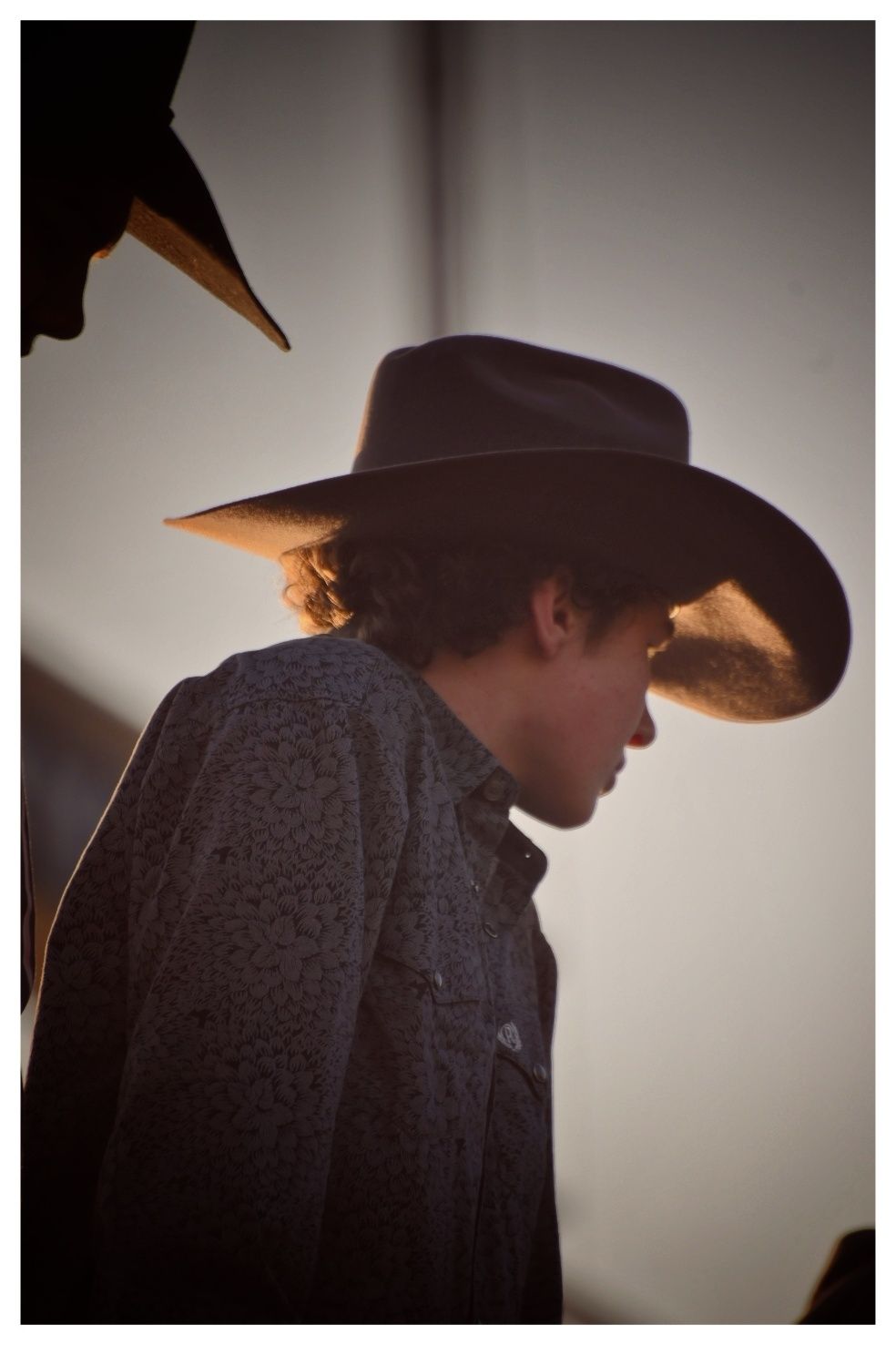
In photography, portrait lenses create what we call "beautiful bokeh." That's the creamy, blurred background that makes the subject pop. Everything else falls away except for what you're focused on. That's exactly how these people approach God. When they're with him, nothing else matters in that moment. The noise fades. The distractions blur. It's just them and Jesus. And probably some worship music and a really nice candle.
They're the ones who will cancel plans to sit with God because they feel like he's beckoning them to spend time with him. They might not be able to explain a complex theological concept, but they can tell you what God's presence feels like. They know the difference between going through religious motions and actually connecting with a living God who sees them.
The benefit: They offer depth. They remind the rest of us that God isn't just a cosmic force or a set of principles. He's personal. He sees you. He knows you. He's close. They model what it means to have an actual relationship with Jesus, not just knowledge about him. When faith starts feeling academic or distant, they bring us back to the heart of it all. They show us that it's possible to really know God, not just know about him.
The risk: Narrow depth of field means a blurry background. Sometimes they can get so focused on their individual relationship with God that they forget about community. They might struggle to see how their faith connects to justice issues, to the poor, to the global church. Their personal spiritual highs can become the measuring stick for everyone else's faith, and they can unintentionally make people feel spiritually inadequate. They might dismiss someone's more intellectual approach to faith as "not spiritual enough" or judge people who don't have the same emotional experiences they do. Like, sorry Karen, not all of us cry during worship. Some of us are just trying to remember the words.
They need to be reminded that intimacy with God should lead them outward, not just inward. That the point of drawing close to God's heart is to become more like him, which means caring about what he cares about, including the people around us.
The Telephoto People (200mm+)
These are your prophetic types, your visionaries, the ones always talking about what's next. They see God moving on the horizon before anyone else notices. They're excited about heaven, about Jesus coming back, about the future fulfillment of God's promises.
They read Revelation and get energized instead of confused. They have this ability to look at current events and somehow see God's purposes unfolding. They're not content with the status quo because they can see what could be, what should be, what will be.
Hebrews 11:1 is their anthem. "Now faith is confidence in what we hope for and assurance about what we do not see." They're already living like the future promises are true today.
These are the people who can't get comfortable in a world that's broken. They feel the tension between what is and what God says is coming. When everyone else is settling into routines and accepting things as they are, the telephoto people are restless. They're watching. They're waiting. They're scanning the distance for signs of God's kingdom breaking through. They probably have strong opinions about the end times and a chart to explain it all.
They talk about things that sound almost absurd to the rest of us. Complete healing. Perfect justice. A world where there's no more pain or crying or death. And they're not just talking about it like a nice idea. They actually believe it's coming, and they're living in light of that reality right now.
In photography, a telephoto lens compresses distance. It makes far away things look closer than they actually are. That's what these people do with eternity. Heaven isn't some distant concept to them. It feels near. Urgent. Just over the horizon. They live with one foot in the present and one foot in the promise.
They're the ones who push the church forward when we get too cozy. They challenge us when we start building our little kingdoms here and forget we're supposed to be advancing God's kingdom. They ask uncomfortable questions like, "If we really believed Jesus was coming back, would we be living like this?" Which is honestly a fair question, but also, can we finish our coffee first?
The benefit: They give us hope and vision. When everyone else is stuck in the present difficulties, they lift our eyes to something better coming. They challenge us to live like we actually believe God is going to make all things new. They remind us that this world isn't all there is, and that our current struggles are temporary. They keep the church from becoming too comfortable with the way things are. They call us to something higher, something more, something worth waiting for and working toward.
The risk: They can miss what's happening right where they're standing. They might neglect present responsibilities because they're so focused on future promises. The bills still need to be paid. The kids still need to be raised. The difficult conversation still needs to happen. They can become impatient with the slow work of discipleship because they want to fast-forward to the good part. Sometimes they're so heavenly minded that they're no earthly good. They might dismiss valid concerns about the here and now because they're fixated on the not yet. They can make people feel guilty for caring about temporal things or for not sharing their sense of urgency about the future. Like, yes, Jesus is coming back, but also my kid has a dentist appointment and I need to figure out dinner.
They need to remember that Jesus told us to occupy until he comes. That means we're supposed to be faithful in the present, not just dreaming about what's ahead.
What We Really Need
Here's what I've learned from photography: you need different lenses for different situations. I wouldn't shoot a landscape with an 85mm, and I wouldn't shoot a close-up portrait with a 14mm. Both would be disasters. Trust me, I've tried.
The same is true in our faith. We need all these perspectives. The church is meant to be a community where the wide-angle people help the portrait people see the bigger story, where the normal lens people keep everyone grounded, where the telephoto people give us hope when we're stuck in the present.
Paul understood this when he wrote in 1 Corinthians 12:12, "Just as a body, though one, has many parts, but all its many parts form one body, so it is with Christ." We're not all supposed to see the same way. We need each other's perspectives.
The problem comes when we think our lens is the only lens. When the wide-angle person dismisses someone's present pain as "not seeing the big picture." When the portrait person judges the theologian for being "too heady and not relational enough." When the telephoto person calls everyone else short-sighted. When the normal lens person thinks everyone else is being dramatic.
I think about Jesus and how he seemed to switch lenses effortlessly. He taught in huge parables about kingdoms and seeds and harvests. Big, cosmic stuff. But he also stopped for one woman in a crowd, one blind man on the side of the road, one little kid who needed a hug. He talked about heaven and what was coming, but he was fully present to wash his friends' feet. He saw the enormous mission ahead but still made time for dinner parties.
Maybe that's what spiritual maturity looks like. Not just seeing through our preferred lens, but learning to pick up different ones depending on what the moment needs. Being willing to zoom out when we're stuck in tunnel vision. Getting close when we've been too distant. Staying present when we want to escape to the future or hide in the past.
We weren't meant to see everything on our own. That's why God gave us each other. Your wide-angle friend isn't wrong, and neither is your portrait-lens friend. They're both seeing something true that you might be missing.
Proverbs 27:17 says, "As iron sharpens iron, so one person sharpens another." Maybe part of that sharpening is learning to look through someone else's lens and let it adjust our own vision.
So maybe the question isn't "which lens is right?" Maybe it's "what lens does this moment need?" And just as importantly, "what are the people around me seeing that I can't see from where I'm standing?"
Because the fullest picture of God comes when we're willing to look through each other's lenses and say, "Oh, I didn't see it that way. Show me what you're seeing."
That's when things get really beautiful.
So here's my question for you: which lens do you naturally see through?
Are you the wide-angle person who always finds comfort in God's bigger plan? The everyday lens person who finds him in the laundry and the carpool? The portrait lens person who experiences God intimately and personally? Or the telephoto person who's always looking ahead to what's coming?
And here's the harder question: what lens do you need to borrow right now? What perspective are you missing that someone else in your life might be able to show you?
I'd love to hear your thoughts. Drop a comment and tell me which lens resonates with you and why. Let's learn from each other's way of seeing.