The complete guide to hosting 50-100 guests with style, elegance, and amazing food, without the wedding industry price tag
Here's the truth nobody tells you when you first get engaged: the wedding industry wants you to believe you need everything. The venue coordinator, the florist, the caterer. They all have these gorgeous lookbooks filled with setups that cost more than a used car. And suddenly you're sitting there with your partner, calculator in hand, wondering if you should just elope to Vegas and be done with it. Elvis impersonator included.
But here's a secret that gets lost in all the wedding noise: some of the most beautiful, meaningful celebrations happen with guest lists under 100 and budgets that would make those big-wedding planners laugh nervously before excusing themselves to cry in their Lexus. The couples who pull off these smaller celebrations? They're not cutting corners. They're making smarter choices and probably sleeping better at night.
And here's the best part. You can actually have a luxury wedding experience and keep it under budget. When you're working with 50 to 100 guests instead of 200, that "modest" budget suddenly goes a lot further. The money you save on not feeding an army can go toward the details that actually matter to you.
So let's talk about how you actually do this without losing your mind, your savings account, or your relationship in the process.
Start with your real number
First things first. Sit down with your partner and figure out what you can actually spend without going into debt or draining your emergency fund. Not what you wish you could spend, not what your parents think you should spend, and definitely not what that wedding blog suggested after you clicked on "average wedding costs" and nearly had a panic attack. What you can genuinely afford. Write that number down. That's your north star, and every single decision you make needs to bow to it.
Too many couples start with a vague budget and then slowly creep up as they fall in love with things they "just have to have." Before they know it, they're $10,000 over budget and eating ramen for the next two years while aggressively avoiding eye contact with their credit card statements. Don't be those people. Your future selves will thank you.
The magic of keeping it small(ish)
Here's where intimate weddings become your best friend. When you're inviting 75 people instead of 200, everything gets easier and more luxurious. Your venue options explode. That beautiful Airbnb estate with the garden? Suddenly it's on the table. A gorgeous restaurant with the private event space? They'll actually take your call. A boutique hotel or historic mansion? These places often have minimum guest counts around 50-100, which means you're in the sweet spot.
And here's the magic: with fewer guests, you can actually afford to splurge on the things that create that luxury feel. Better food per person. Higher quality alcohol. More elaborate florals if that's your thing. Real china instead of disposable plates. The budget that would've been spread thin across 200 people can now create an genuinely elevated experience for 75.
The guest list conversation is usually the hardest part, though. Someone's feelings are going to get hurt. Your mom's going to mention her college roommate who'd "just love to be there" even though you've met this person exactly twice, once as a baby and once at your high school graduation where she confused you with someone else. Your partner's dad is going to bring up second cousins you've never met who apparently "always ask about you." Stand your ground. This is where you need to be a little ruthless, or at least pretend you have a venue capacity issue. Blame the fire marshal. Works every time.
Here's what works: make your A-list first. These are the people you absolutely cannot imagine celebrating without. If you had to run away and get married tomorrow, who would you genuinely miss having there? Not who would be offended if they weren't invited. Who would you actually be sad about. That's your real list. Everyone else is negotiable, regardless of how many of your childhood birthday parties they attended.
Think outside the wedding venue box
Traditional wedding venues know they've got you in a corner, and they price accordingly. The minute you say the word "wedding," the cost magically doubles. It's like saying "bridal" in a hair salon. Suddenly that updo costs $150 instead of $60. So get creative with your location and maybe don't lead with "wedding" when you're making inquiries.
For groups of 50-100 people, you've got more flexibility than you think. Large Airbnb properties or vacation rentals can accommodate your guest count and often cost a fraction of traditional venues. Museums, art galleries, and historic homes sometimes offer space rentals that are surprisingly affordable, especially when you're not filling their entire capacity. You're basically getting a built-in backdrop for photos without spending a cent on decorations.
Restaurants are another goldmine. Many have event spaces or can do full buyouts for groups your size. You're getting your venue and your meal in one shot, which is the kind of efficiency that just makes sense. Plus, restaurants know how to feed people well. It's literally their job.
There's a couple who got married at their favorite brewery, reserving the entire space on a Sunday afternoon when it would normally be slow anyway. With 80 guests, they filled the place perfectly. The cost? Way less than any traditional venue, plus unlimited craft beer for their guests. The groom's vows included a surprisingly moving metaphor about their relationship being like a well-crafted IPA, and honestly? It worked. The relaxed vibe was exactly what they wanted, and the industrial-chic setting looked amazing in photos. Also, nobody complained about the alcohol selection.
Friday or Sunday weddings are your friend
Saturday weddings cost more. That's just how it works. Every vendor from the venue to the DJ charges premium rates for Saturday night because they know that's when everyone wants to get married. But Friday evenings and Sunday afternoons? Those are the bargain days of the wedding world. The vendors actually want to book those days because otherwise they're just sitting at home watching Netflix and stress-eating snacks like the rest of us.
Friday weddings feel just as special as Saturday ones. Sure, some people might have to take off work early, but most of your guests will make it work for an evening celebration. And honestly? If someone's going to make a big deal about missing two hours of work for your wedding, maybe they didn't need to make the cut anyway. Just saying.
Sunday afternoon celebrations have this lovely, relaxed vibe that's hard to beat. There's something about day drinking in the sunshine that just makes people happy. Plus, you can usually negotiate better rates across the board, and everyone gets to sleep in their own beds that night instead of drunkenly singing karaoke at the hotel bar until 2 AM. Win-win.
The off-season is seriously underrated
Everyone wants to get married between May and October. Weather's nice, flowers are blooming, outdoor photos are gorgeous, Instagram looks amazing. But you know what else happens during peak wedding season? Prices skyrocket and vendor availability disappears faster than cake at a reception.
Winter weddings can be absolutely magical. Cozy indoor spaces, dramatic lighting, rich colors, everyone dressed up in their most sophisticated cold-weather attire instead of sweating through their spanx. That golden hour light in winter? Absolutely stunning. Plus, nobody's makeup is melting off their face, which is always a bonus.
November through March is when venues and vendors have openings and are willing to negotiate. You might save 30-40% on your venue alone just by choosing a January date instead of a June one. Use that savings for the things you actually care about, like an open bar or a honeymoon that doesn't involve camping in someone's backyard. Or take that savings and upgrade your dinner to include filet mignon. That's the luxury move right there.
Sure, you risk snow or rain, but honestly? You risk rain in the summer too. At least in winter you have an excuse to serve hot chocolate and bourbon, which honestly sounds better than warm champagne that's been sitting in the sun anyway.
Where to spend and where to skip
Here's the thing about wedding photography: invest in it. These are the only tangible things you'll have left after your wedding day. Everything else—the flowers, the cake, the decorations—it all goes away. The photos stay forever, haunting your living room wall and your parents' refrigerator for decades to come.
But you don't need to hire the most expensive photographer in your city, the one who shoots celebrity weddings and has a three-year waiting list. Look for talented photographers building their portfolios who have a style you love. They're often just as skilled as established pros but charge less because they're still growing their business and haven't yet developed that jaded "I've seen everything" attitude. When you meet with them, look at full wedding galleries, not just the highlight reels on Instagram. You want someone who can capture genuine moments, not just pretty staged shots where everyone looks like they're auditioning for a fragrance commercial.
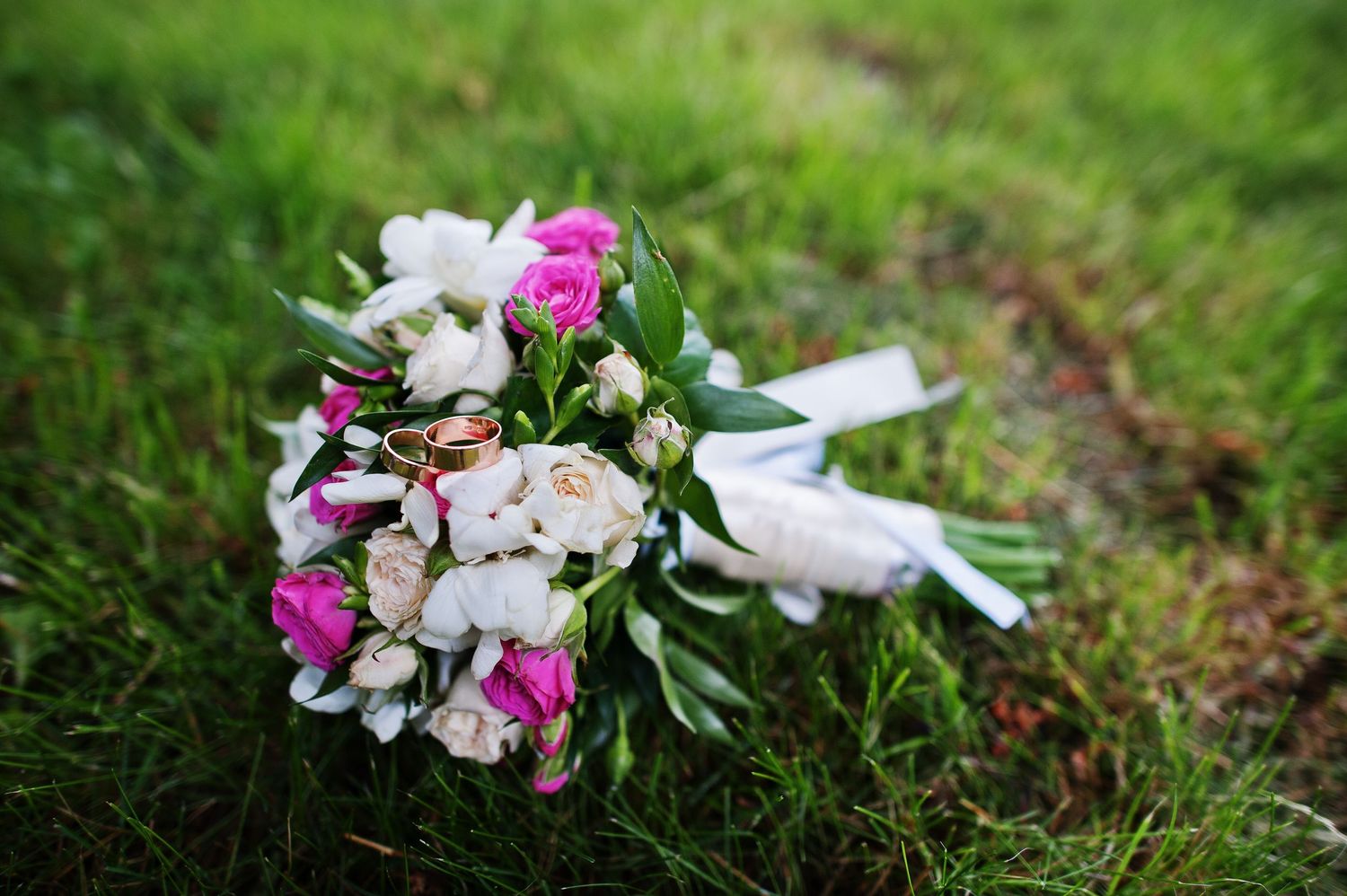
For flowers, talk to a local florist about using seasonal blooms. Or better yet, hit up a farmer's market the day before your wedding and arrange your own bouquets while pretending you know what you're doing. Grocery store flowers are actually gorgeous if you know how to arrange them, and you'll spend maybe $200-300 for multiple arrangements instead of $2,000. Trader Joe's bouquets can look just as beautiful in photos as expensive florist arrangements. Nobody at your wedding is going to inspect your bouquet and go, "Hmm, are these only $4.99 peonies? How pedestrian."
But here's where you can create that luxury feel: focus your floral budget on a few key areas. A stunning ceremony backdrop, beautiful centerpieces for just the head table, and quality bouquets. Skip the elaborate aisle decorations and individual flowers for every surface. Strategic placement looks just as elegant as covering everything in blooms.
The food situation (where luxury happens)
Catering is usually one of the biggest wedding expenses, but here's where your 50-100 guest count becomes absolute gold. This is where you can create a genuinely luxurious experience without breaking the bank. Instead of serving 200 people chicken breast, you can serve 75 people something spectacular.
Family-style meals feel abundant and luxurious. Stations with carving boards or fresh pasta made to order. Small plates or tapas-style service with multiple courses. When you're feeding fewer people, you can afford to upgrade the menu significantly.
If your venue allows outside catering, this is where you can really make smart choices. Local restaurants will often cater for much less than traditional wedding caterers. We're talking half the cost or less. That Thai place you love where you order from every Friday? Call them up. Many restaurants don't advertise catering services but will do it if you ask. They might look at you funny at first, but money talks.
Or consider this move: hire a private chef. For 50-75 people, a private chef might actually be cost-competitive with traditional catering, and the food quality goes through the roof. Your guests will be talking about that meal for years.
Brunch or lunch weddings are naturally cheaper than dinner, but they can still feel luxurious. A gorgeous brunch spread with a mimosa bar, carving station, and made-to-order omelets? That's a luxury experience that costs less than an evening sit-down dinner.
The bar strategy (where you can really splurge)
Open bars can demolish a budget when you're serving 200 people, but for 50-100 guests? You can actually afford to do it right. This is where that guest count works in your favor.
A full open bar with quality spirits becomes achievable. A signature cocktail station with a mixologist making fresh drinks. Top-shelf options without wincing at the bill. When you're not buying drinks for 200 people, you can afford to be generous with the 75 who made the cut.
Some couples buy their own alcohol from Costco or a wholesale club and hire a bartender independently. In states where this is legal, you'll save a massive amount of money compared to venue bar service with their 300% markup on vodka. For your guest count, this could mean the difference between beer-and-wine-only and a full bar with premium options.
And here's a secret: after the first hour, most people can't tell the difference between top-shelf and mid-range alcohol anyway. Nobody's wedding memories hinge on whether you served Grey Goose or Svedka. They hinge on whether they had to wait 45 minutes in line for a drink, so spring for good bartenders and keep the lines moving. Multiple bar stations for 100 guests prevents bottlenecks and keeps the luxury vibe flowing.
DIY what makes sense (and what doesn't)
The internet will tell you to DIY everything to save money, usually while showing you some impossibly complicated project that requires 47 steps and materials from six different craft stores. But real talk: your time and sanity have value. DIY projects only make sense if you genuinely enjoy doing them, if they're actually simple, or if you have a friend who owes you a really big favor.
Invitations? Design them on Canva and print them at a local print shop or online. You'll get professional-looking invitations for a fraction of the cost and zero chance of a glue gun injury. For 75 invitations instead of 200, even nicer printing becomes affordable. Spring for the thicker cardstock. Add a wax seal if that's your vibe. These little luxe touches cost way less when you're not doing it at scale.
Decorations? Simple, elegant touches like candles, greenery, and string lights go a long way. You don't need Pinterest-level styled perfection with seventeen different types of eucalyptus and hand-calligraphed table numbers. Most of your guests won't even notice the decorations because they'll be too busy drinking your signature cocktail and judging other people's outfits.
But don't DIY your hair and makeup unless you're actually good at it. Wedding day hair trials exist because humidity is real and stress sweat is real and you don't want to be touching up your own eyeliner seventeen times. Same with your cake—trying to bake and frost a multi-tiered wedding cake the night before your wedding is a recipe for a breakdown, possibly literal if you're attempting fondant. Sometimes paying someone else to handle something is money well spent for your peace of mind and your relationship's survival.
Music without the massive DJ cost
Professional DJs and bands are expensive, sometimes running $2,000-$5,000 or more. For that price, they better be playing your requests flawlessly and getting your awkward family members onto the dance floor through sheer force of personality. But for your guest count, you've got options.
A talented DJ can handle 50-100 people easily and create a great party atmosphere. Or hire a solo musician for ceremony and cocktail hour (this is where you create that elegant, luxury feel), then switch to a curated playlist for dinner and dancing. String quartet for the ceremony? Absolutely creates that upscale vibe, and for an hour of playing, it's more affordable than you'd think.
Or go with a small band—a trio or quartet instead of a full 8-piece band. They cost less but still create that live music energy that elevates the whole event.
Just do everyone a favor and appoint someone as the playlist manager if you're going the DIY music route. You don't want your weird uncle hijacking the aux cord and suddenly everyone's doing the Cha Cha Slide at your sophisticated intimate gathering.
The dress doesn't have to break the bank
Bridal shops want you to believe you need a $3,000 dress that you'll wear for approximately six hours and then preserve in a box in your closet for the rest of your life. But that's nonsense. Beautiful wedding dresses exist at every price point. Check out BHLDN, Reformation, or even department stores like Nordstrom. Rent the Runway has wedding dress rentals now, which is perfect if you're practical and not particularly sentimental about keeping a dress you'll never wear again.
Secondhand and sample sales can score you designer dresses for 70% off. The dress has been tried on a few times? Who cares. You're going to spill something on it during dinner anyway. That's just science.
The same goes for suits and tuxes. Renting is usually the way to go unless your partner will actually wear the suit again, which they always say they will but statistically probably won't. Many grooms buy nice suits off the rack and get them tailored, which costs less than a traditional tux rental and means they own a decent suit for future events. Like other people's weddings, where they can judge the couple's budget choices.
Rethink the wedding cake
Wedding cakes are marked up like crazy. The words "wedding cake" add at least 30% to the cost compared to a regular celebration cake. It's the same cake, I promise. The baker just knows they can charge you more because you're emotionally vulnerable and slightly desperate.
Call a local bakery and order a small two-tier cake for cutting photos, then supplement with sheet cakes in the back for actual serving. For 75 people, you only need a small display cake. Your guests get the same delicious cake, you get your photo moment where you adorably feed each other without smashing it in each other's faces (or not, your call), and you save serious money.
Or ditch the traditional cake entirely and do something that feels more luxurious. A dessert bar with multiple options—petit fours, French macarons, mini cheesecakes. A crepe station where someone makes them fresh to order. Pie from a local bakery known for incredible pies. One couple served donuts from their favorite local shop at their wedding. People are still talking about those donuts. Nobody remembers the cake from most weddings, but everyone remembers really good donuts.
The little luxuries that don't cost much
With a smaller guest count, you can afford touches that make the day feel genuinely special without spending a fortune:
Real linen napkins instead of paper. For 75 people, renting nice linens costs maybe $150-200. It's a small upgrade that photographs beautifully and feels elegant.
A welcome bag for out-of-town guests. When you're only making 30 bags instead of 100, you can include nicer items—local treats, good coffee, a personalized note.
Individual place settings with calligraphy name cards. Takes time but not much money, and it creates that custom, thoughtful vibe.
A really good coffee and tea station. Not the cheap hotel coffee—actual good espresso and specialty drinks. Your guests will appreciate this more than you know.
Late-night snacks that are actually good. Pizza delivery is fine, but for 75 people, you could do warm cookies and milk, gourmet grilled cheese, or sliders from a local spot. Small touch, big impact.
Prioritize what actually matters to you
This is the most important thing, and I cannot stress it enough. Every couple has different priorities. Maybe you don't care about flowers but you really want incredible food because you're both secretly food snobs. Maybe you'll happily skip the band but you want to splurge on a videographer because your grandmother can't travel and you want her to see it. That's completely fine. This is your wedding, not a performance review where you're being graded on hitting every traditional wedding element.
Sit down together and make a list of the three things that matter most to you about your wedding day. Put your money there. Everything else can be basic, simple, or skipped entirely. Nobody at your wedding will remember the centerpieces or the specific song that played during dinner or whether your napkins were folded into swans. They'll remember the feeling of the day, the quality of the company, whether the food was good, and whether there was enough alcohol. That's it. Those are the wedding memories.
The beauty of intimacy (even at 100 people)
Here's the thing about weddings with 50-100 guests: they're often more meaningful than big productions. When you strip away the pressure to impress 250 guests and keep up with wedding trends and worry about what people will post on Instagram, you get something really special. You can actually talk to everyone there instead of speed-walking through the venue like you're late for a meeting. You can take your time during dinner. The energy is different—more relaxed, more genuine, more focused on the actual commitment you're making instead of whether the lighting looks good for photos.
And here's the luxury part nobody talks about: your guests feel it too. They're not just another face in a crowd of 250. They're part of something more intimate. They can actually meet and talk to other guests. They're not stuck at a table with strangers wondering why they drove three hours for this. The whole day feels more personal, more meaningful, more like an actual celebration and less like a production.
One ceremony in someone's living room with 60 people stands out as a perfect example. The couple's parents, siblings, and closest friends filled a beautiful historic home they'd rented for the weekend. There was this moment after they said their vows when everyone just spontaneously started hugging and crying and laughing. No planner had scheduled it. No one was performing for a crowd or thinking about what it would look like on social media. It was just pure emotion, and it was beautiful. Also someone's dog wandered in halfway through and just sat there like he was part of the ceremony, which everyone thought was a sign of good luck or something.
Getting started
Start planning early if you're the organized type, but don't stress if you're more of a "figure it out as you go" person. Weddings with 50-100 guests come together at a reasonable pace. You've got enough people that you need real planning, but not so many that everything takes forever. Six to nine months of planning is usually plenty, though you can absolutely pull one together faster if needed. Beautiful weddings have been planned in six weeks. Were the couples slightly frazzled? Sure. But it worked out.
Make a spreadsheet with all your expenses. Actually track what you're spending in real time, not what you think you'll spend or what you budgeted in theory. This helps you make adjustments before you're in too deep and having stress dreams about defaulting on your student loans because you just had to have those uplighting effects.
And remember: your wedding is not a performance. It's not content for Instagram, even though I know that's hard to remember in 2025. It's a celebration of your relationship and your commitment to each other. The most successful weddings are the ones where couples keep that perspective. They make decisions that feel authentic to them instead of trying to impress other people or live up to some imaginary wedding standard set by people they don't even know.
You can absolutely plan a beautiful, memorable, luxurious intimate wedding on a budget. The key is that 50-100 guest sweet spot where you have enough people to create real energy and celebration, but not so many that you're drowning in costs. It just takes some creativity, smart prioritization, the courage to do things your own way, and the ability to say "no" to your well-meaning relatives who have a lot of opinions about your choices.
And honestly? Those are usually the weddings that people remember most fondly anyway, even years later when they can't remember what they had for lunch yesterday but they definitely remember your amazing food, that incredible cocktail, and that time the dog crashed your ceremony.